Transforming Guyana, Season II, Episode II, Local Content in the emerging Guyanese Oil and Gas Economy

MEDIA ADVISORY

:

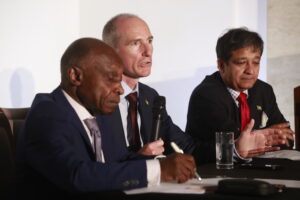
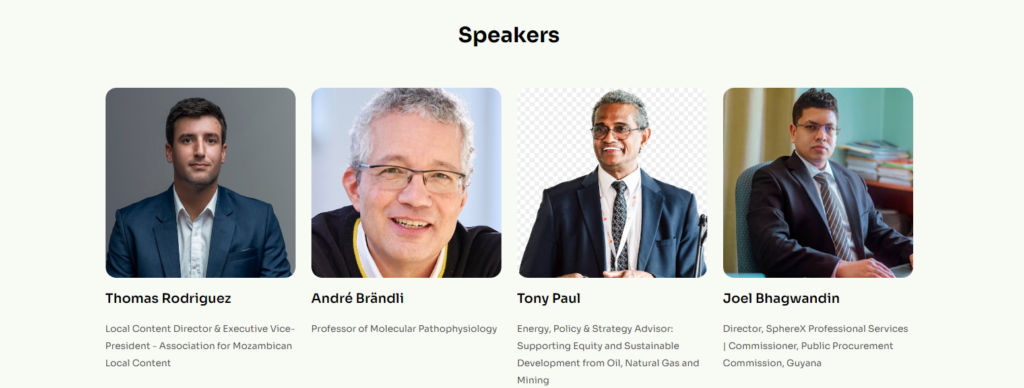
Speakers
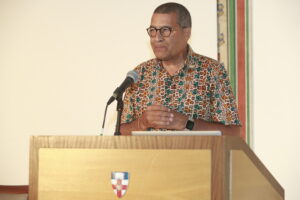
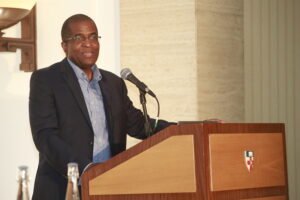
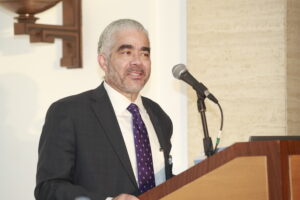
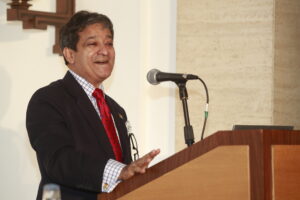
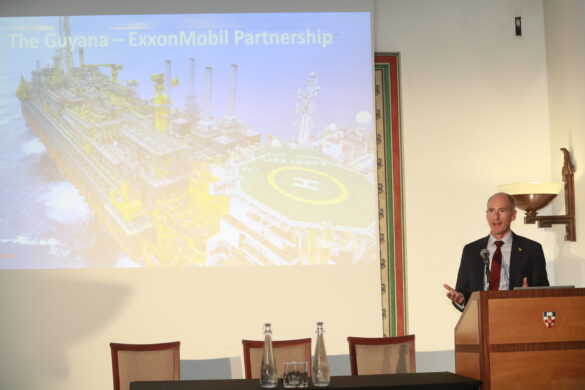
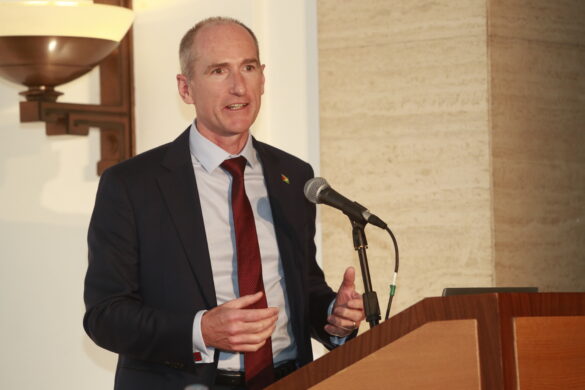
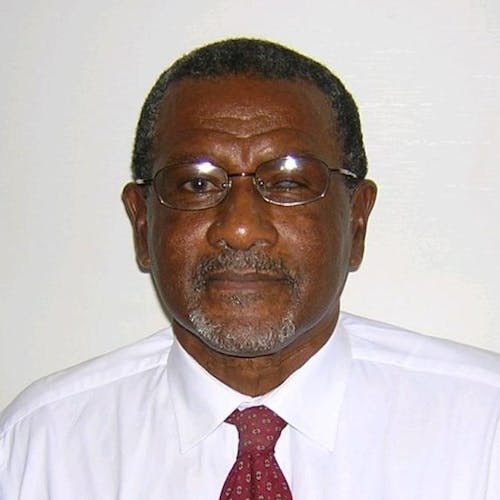
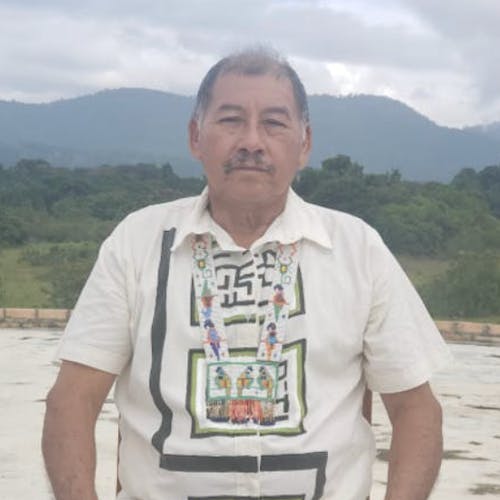
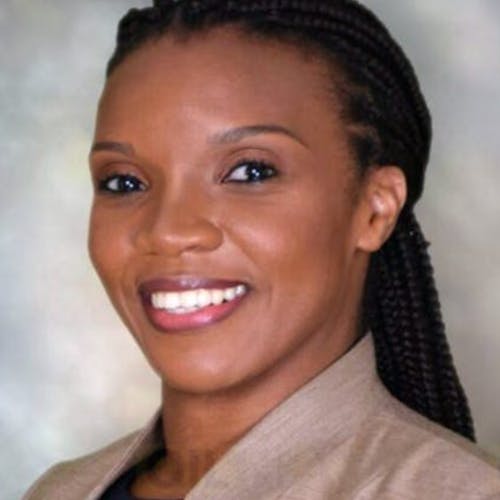
  • Thomas Rodriguez: Local Content Director & Executive Vice-President – Association for Mozambican Local Content
  • André Brändli: Professor of Molecular Pathophysiology
  • Tony Paul: Energy, Policy & Strategy Advisor: Supporting Equity and Sustainable Development from Oil, Natural Gas and Mining
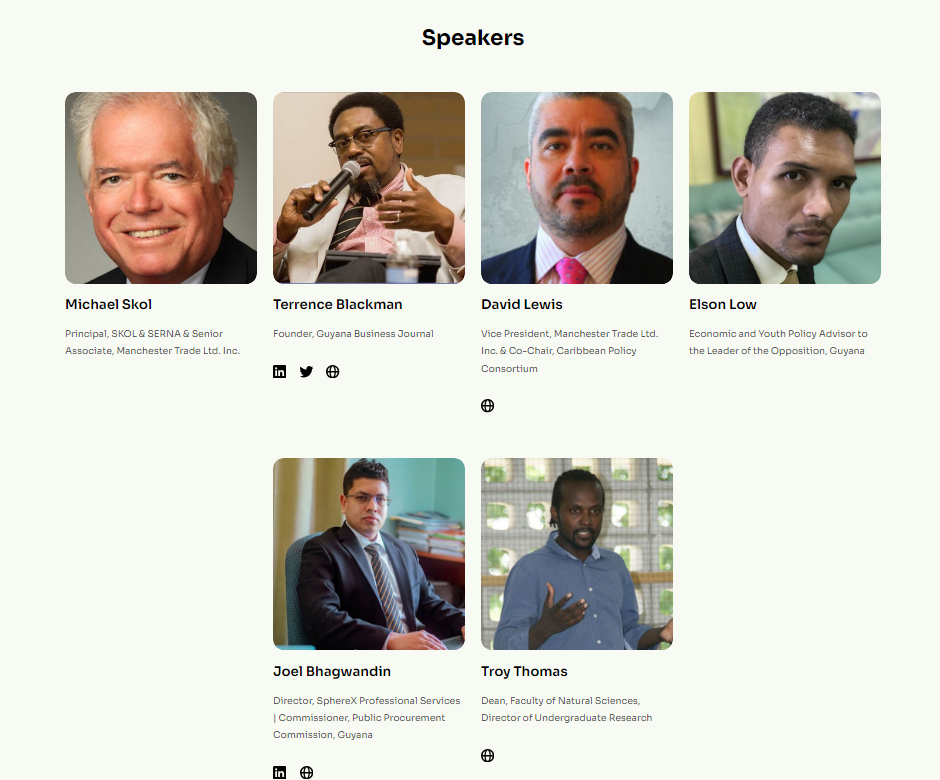
  • Joel Bhagwandin: Director, SphereX Professional Services | Commissioner, Public Procurement Commission, Guyana

DATE: July 12, 2023


Moderators

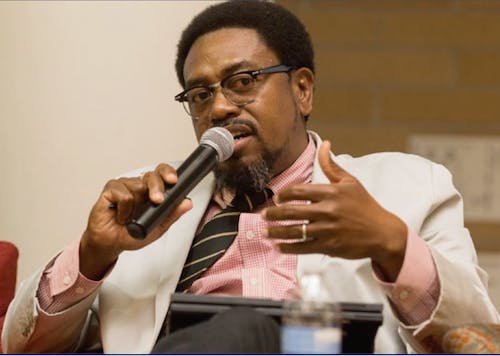
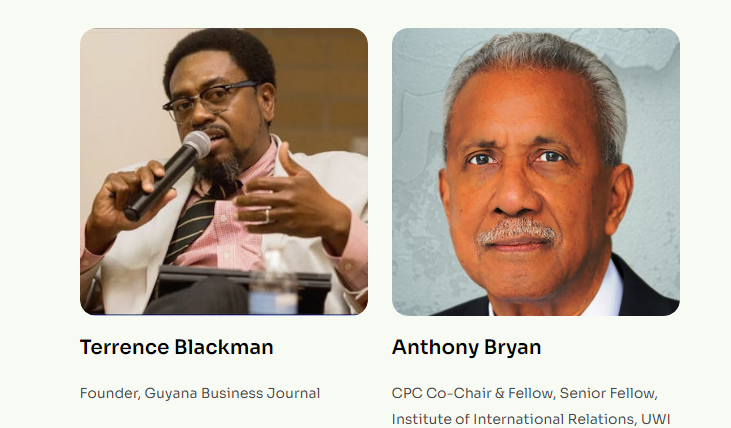
  • Terrence Blackman: Founder, Guyana Business Journal
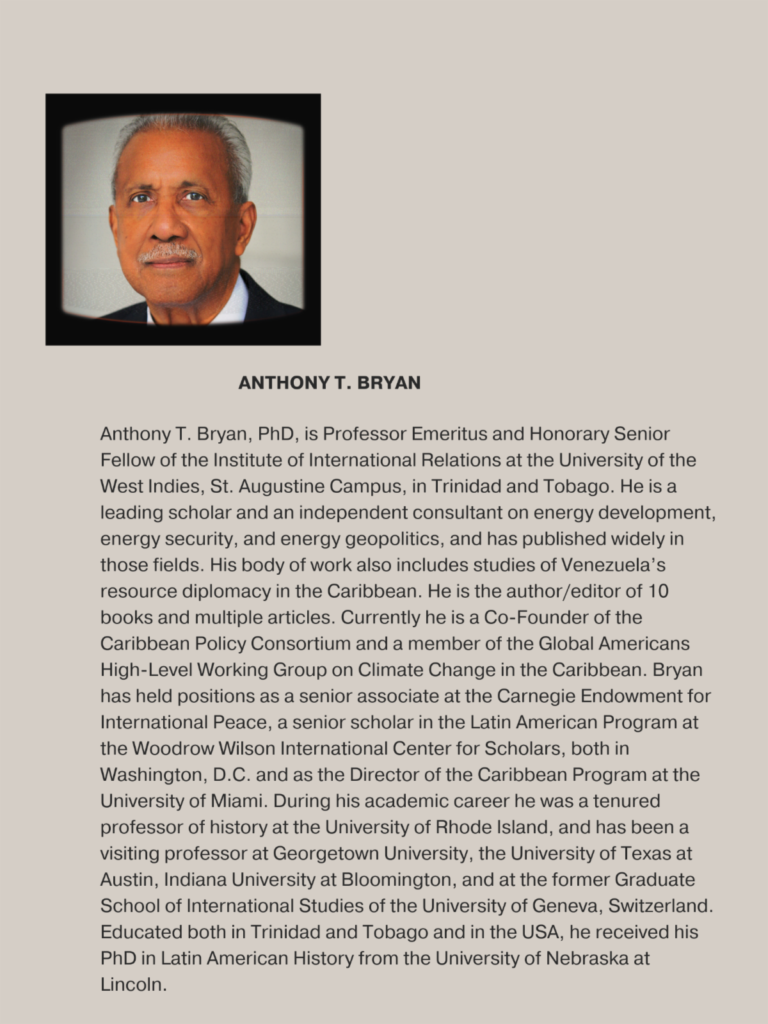
  • Anthony Bryan: CPC Co-Chair & Fellow, Senior Fellow, Institute of International Relations, UWI

You can view the webinar here

Relevant Quotes

Tony Paul:

  • “As the owner of the resource, countries should understand that they have a right to ask for some benefit from the money they’re spending…The good thing about doing this now is that if you participate in the oil and gas sector with major companies and their contractors, you’re working alongside and learning from best-in-class companies in the world. That participation in the sector is critically important to building capacity.”
  • “When we invest, we get modern salaries and wages – profits. If you put that back in the local economy, then we can build our capital markets and have the capacity to invest, using the business skills and the capital, in other sectors. That’s what allows us to transform our economies rather than just participate in the sector.”

 Joel Bhagwandin:

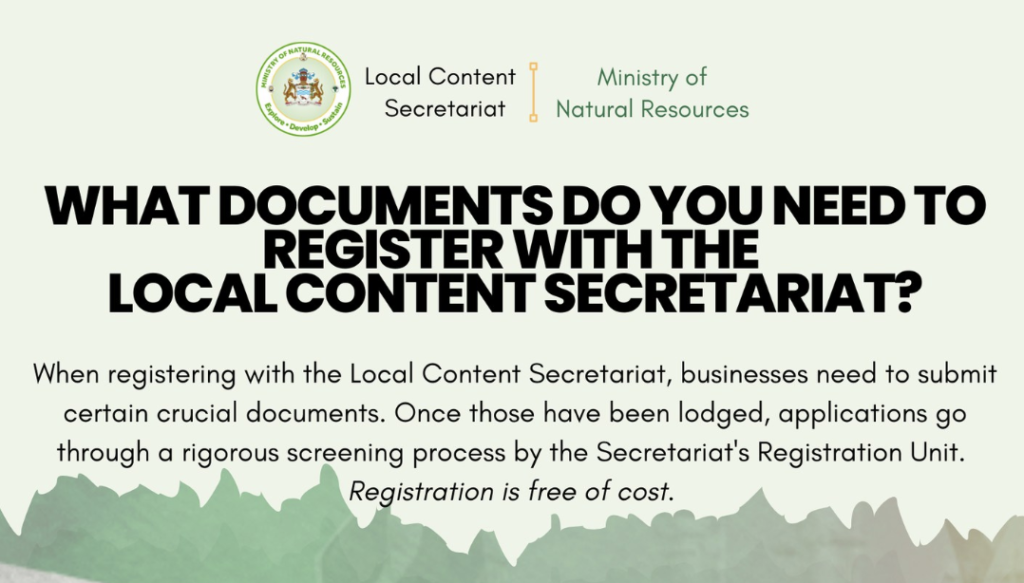
  • “Up to this point, we have 838 companies that are registered with the Local Content Secretariat. Of these, we have 752 companies, about 90% of the total, that are 100 percent Guyanese-owned…about 80 to 90 percent of these companies have contracts in the oil and gas sector.”
  • “It is important to note that the local content legislation is specific to oil and gas; all the other sectors are open to foreign companies and foreign participation.”

 Terrence Blackman:

  • “To give a proper, objective report, there are challenges and opportunities. We should always have both of them sitting on the table.”
  • “I think it’s important for us to have, at times, a sharp critique of what we’re doing as a way to [help us] form consensus that moves the country forward in an equitable manner.”

 Anthony Bryan:

  • “One message that comes through is that increased local content will remain elusive unless it is supported by positive action on the part of government and the firms that account for most of the expenditure.”
  • “Local content optimizes the level of usage of local goods, services, people, business, so all in all, it can’t really be a bad thing.”

Thomas Rodriguez:

  • “Communication is very important and those who have the guts to share terms of reference and invite others to contribute…there’s a lot of very knowledgeable and experts in any country, but not everyone has the same means to implement something.”
  • “Oil and gas is a very dynamic environment when it comes to technology and skills, so we always need to be updated and have ambassadors, teachers to relay information to students and existing workers.”

André Brändli:

  • “There’s a shortage of skilled labor. There’s a small pool of Guyanese with tertiary degrees…then the oil and gas industry competes successfully for those few employees that have skills, which leads to other problems.”
  • “Do you want to close off and be protective, or do you want to provide a playing ground where foreign companies come in, enjoy being here and as a fringe benefit, train local people.”
  • “Guyana is a country that didn’t have resources they were able to monetize for the longest time. I think with the onset of the oil era, we are in a different situation and we should be able to use that money for the benefit of the Guyanese people.”

Terrence Blackman, Ph.D., Founder & CEO Guyana Business Journal terrence.blackman@guyanabusinessjournal.com

Dr. David E. Lewis, Fellow and Co-Chair, Caribbean Policy Consortium DavidLewis@ManchesterTrade.com

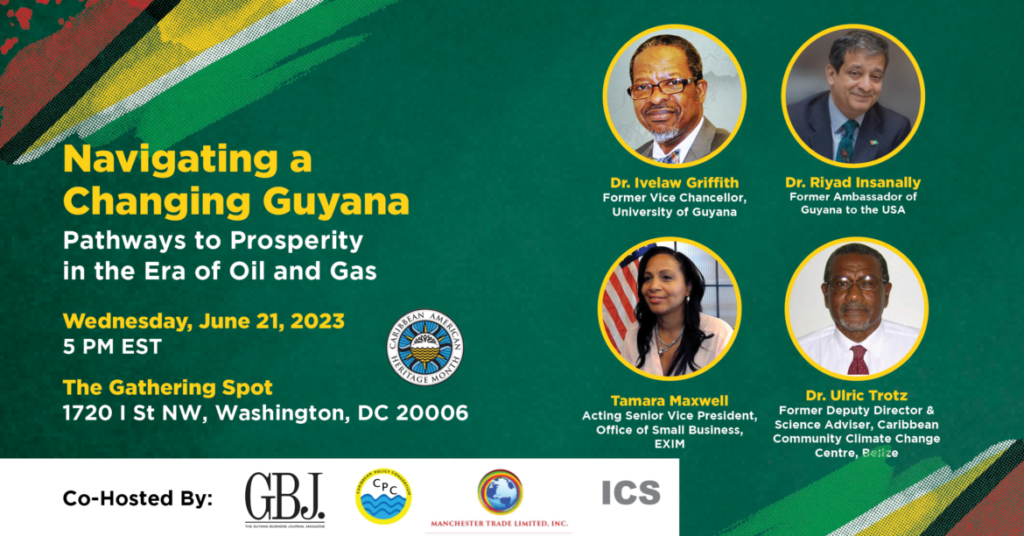
Navigating a Changing Guyana: Pathways to Prosperity in the Era of Oil and Gas

Guyana stands to earn tens of billions of US dollars over the next two decades from developing the burgeoning oil and gas sector. What does this mean for Guyana and, importantly, the hundreds of thousands in the Diaspora? What are the pathways to our collective prosperity?

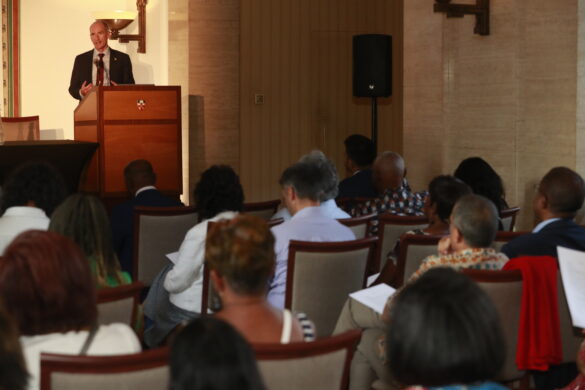
 To answer some of these questions, The Guyana Business Journal & Magazine (GBJ), the Caribbean Policy Consortium, and Manchester Trade Inc., with the support of the Institute of Caribbean Studies, hosted a public forum Navigating a Changing Guyana: Pathways to Prosperity in the Era of Oil and Gas, a free public forum on Wednesday, June 21, from 5:00-7:00 p.m. at The Gathering Spot 1720 I St NW, Washington, DC 20006)

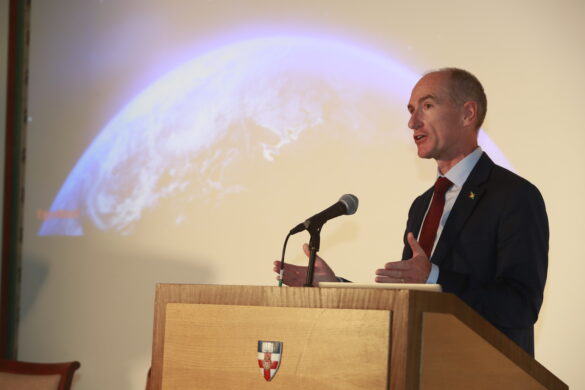
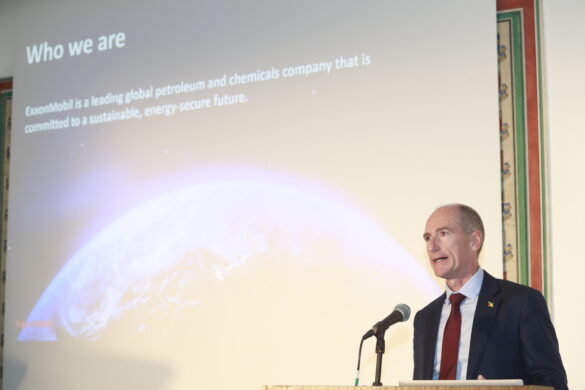
The free event brought together experts from the private and public sectors in Guyana and the Diaspora to engage the audience and share views on these questions. Representatives of ExxonMobil shared a Diaspora Oil & Gas Update, and our two panels examined Educational, Environmental, and Emerging Business imperatives.

Panelists included Dr.Ivelaw Griffith, Dr. Riyad Insanally, Dr. Ulric Trotz, Tamara Maxwell, and Oslene Carrington.

Please view the live stream here

Transforming Guyana Season II, Episode I,  Revenue Sharing, and the Oil & Gas Economy

Media Advisory:

Production of the Guyana Business Journal & Caribbean Policy Consortium


The Guyana Business Journal (GBJ) Caribbean Policy Consortium hosted Transforming Guyana Season II, Episode I,  Revenue Sharing, and the Oil & Gas Economy, on Wednesday, June 14, 2023, at 10:30 AM EST.

Speakers

  • Terrence Blackman: Founder, Guyana Business Journal
  • Riyad Insanally: Former Ambassador of Guyana to the U.S.
  • Roger Hosein: Senior Lecturer, UWI, St. Augustine, Trinidad and Tobago
  • Remi Piet: Cofounder and Senior Partner, Embellie Advisory

You can view the full webinar here :

Relevant Quotations

Riyad Insanally

  • “To ensure economic diversification and long-term growth, we need to be looking at the experiences of our close neighbors and countries far afield.”
  • “We need to avoid the curse of transfers and subsidies on a widespread scale…We need to look at the application of sound economic theory to be applied to the political economy.”
  • “We need the all expertise that is available from multinational investments, multilateral financial institutions and friendly governments. We can benefit from our CARICOM sister states. If we can guarantee Guyana’s own sustainable development, we can underpin the sustainable development of the CARICOM region.”
  • “The Natural Resources Fund – the Sovereign Wealth Fund – is going to be a key element in the way that the investment income can be used to underpin capital investment.”

Remi Piet

  • “It’s important to have the right actors engaged…you need to be sure there are more structural entities at the round table, sectoral experts are brought in, academic voices and development operators. All these have to be included in different platforms or engagement in terms of going from the revenue sharing financial structure to the actual trickling down…In that case there’s already been a lot of work in Guyana.”
  • “The reality of what will make the future of Guyana is the capacity to attract the Diaspora’s investment into some diversified assets in Guyana and production that will make sure there is continuous developments to stability.”

Roger Hosein

  • “I am hoping, though, that with the resources that are flowing into Guyana that they spend these and build up institutions and work on their ease of doing business and design appropriately by labor market strategy.”
  • “We [Trinidad and Tobago] collected about $75 billion USD in energy runs between 1962 and 2021. Where the resources were used is of great concern to me…I think that’s where Guyana will have to be most careful. Right up front, Guyana has started a long-term smoothing process by having a stabilization fund and resources flow into that. I see lots of capital injections being made into the economy. These capital injections, while some are generalized, must pay attention to the non-energy, non-tradeable sector where revenues have to be balanced in terms of collecting.”
  • “My two cents is that the strength of the Guyanese economy in the next 15 years is not the energy sector…The strength of the Guyanese sector 15 years from this point is what and how they manage that energy resource to manage the structure of production, trade and employment so that the nonenergy, non-tradeable sector does not corrode old sectors that generate foreign exchange. We have seen this story a million times.”
  • “My humble opinion is that Guyana will be the exception to the rule and not get it all wrong.”
  • “The engine for economic transformation must be human capital formation.”

Terrence Blackman, Ph.D., Founder & CEO Guyana Business Journal terrence.blackman@guyanabusinessjournal.com

Dr. David E. Lewis, Fellow and Co-Chair, Caribbean Policy Consortium DavidLewis@ManchesterTrade.com

Transforming Guyana, Episode XII: Digitization and the emerging Guyanese Oil and Gas Economy

Media Advisory:

The Guyana Business Journal (GBJ) & Caribbean Policy Consortium host Episode XII of the  Webinar Series, Transforming Guyana, Episode XII: Digitization and the emerging Guyanese Oil and Gas Economy Wednesday, May 10, 2023.

Panelists:

Lance Hinds, Chief Executive, BrainStreet Group & Director, DreamSpace Foundation, Eldon Marks, Tech Entrepreneur & Innovator, Mike Singh,  Chair, Guyana ICT Tech & Innovation Council, Multidimensional Cybersecurity Expert, Erika Piirmets, Digital Transformation Adviser, e-Estonia

VIEW HERE:

Relevant Quotations:

David Lewis

  • “Guyana is poised…to really leverage the economic growth from the oil and gas boom in the technology sectors.”
  • “If we cannot discern and differentiate the political, social, cultural human rights issues, development issues between linkages with China versus linkages with the West. If we cannot assimilate the fact that the Caribbean is in the West, then we are going to be in serious trouble, and the cyber technology issue is just one of it.”

Erika Piirmets

  • “Digital services can offer minimizing the entry barrier to businesses. This has led Estonia to be a sort of Silicon Valley of Europe…As a side effect of digitalizing different services, thousands of years of working time is saved thanks to the interoperability of the backbone of our digital state.”
  • “More than 25 years, Estonia has been building the society to be digitally capable but all while building the technological infrastructure, we have been supporting form the government level all our user group through public and private courses that have now led to 80% of the population using some sort of digital service.”
  • “It’s not about turning everything digital and saying that we use the maximum technology that we can. So we don’t fetishize technology but we seek to improve people’s life quality.”

Lance Hinds

  • “There are core things to be done, of course. Certainly on the legislative side…there is a data protection bill that is out for comment which, when I look at other legislation in the Caribbean, this one is forward looking. It follows the GDPR model of the European Union in terms of structural intent, and I think it is a good one to comment on and encourage them to take to next stages.”
  • “This is where national planning really comes into effect in terms of making sure that all citizens buy in, all citizens understand that this is to their benefit…The whole concept of showing citizens in Guyana that this is about providing convenience and access…”

Eldon Marks

  • “One of the issues we’re still facing today is that we’re hemorrhaging a lot of valuable talent year after year…When it comes to finding talent within the local tech ecosystem to keep it driven that is, again, a shared issue among all of the various entities locally.”
  • “Much of the students that I’ve worked with over the years, and the fledgling entrepreneurs along the way, I find that the recurring theme is that they have big dreams but they rarely ever extend beyond the shores of Guyana. Exposure fixes that.”
  • “Change management is absolutely necessary. Vision and oversight, critical even more so…The ability to have individuals access an environment that permits them to learn technologies, learn the processes to deliver on those technologies, and then have opportunities to do so – absolutely critical.”
  • “Because we have multi-faceted problems [in Guyana], we need a multi-faceted steering body – a visioning body comprising of individuals who understand the big picture and are specialized in their own right with representation across the public sector, private sector, and civil society, to compliment an overarching vision for development.”

Mike Singh

  • “Why we need to have a cohesive industry body is so we can bring global best practices to the fore and these global best practices emanate from the collective world of experience and work that’s being done at the International Telecommunications Union.”
  • “Cybersecurity in Guyana is not something they’ve given enough attention to, either through a lack of exposure, a lack of adequate tools; it’s a work in progress. But in my opinion, it’s not being done fast enough.”
  • “My advice for the government of Guyana…you need to rip out every piece of Huawei gear and equipment…Let me be clear, they’re going to attack the oil and gas network here – not if, but when. If you’re transmitting data on networks that have Huawei equipment, you’re leaving yourself wide open for abuse and more than likely total shutdown.”

Moderators

Dr. David Lewis & Dr. Terrence Blackman.

Transforming Guyana, Episode XI: Empowering the Future

Transforming Guyana, Episode XI: Empowering the Future
Guyana’s Youth and the Oil & Gas Economy

The Guyana Business Journal (GBJ) Caribbean Policy Consortium welcome you to Episode XI of the  Webinar Series, Transforming Guyana, Wednesday, April 12, 2023, at 10:30 AM EST.

Panelists: Karen Abrams, Founder STEM Guyana; Ronald Austin Jr., Columnist; Florence Alexi Larose, Consultant on Sustainable Development, Community Building, and Rural Development for Indigenous Peoples; and Elson Low, Economic and Youth Policy Advisor to the Leader of the Opposition, Guyana.

Essential Questions: How can we systemically and systematically empower young Guyanese, especially marginalized youth, to play a more active role in contributing to and benefitting from national development spurred by the emerging Oil and Gas economy?

How do we engage younger generations in the diaspora through the effective use of technology, social media, and innovative approaches to mentoring?

Moderators

Dr. David Lewis & Dr. Terrence Blackman.

Transforming Guyana Episode X: “Unlocking the Potential of Guyana’s Oil and Gas Economy

Unlocking the Potential of Guyana’s Oil and Gas Economy: Balancing Energy Development and Environmental Stewardship

Media Advisory

Please see the white paper here: Intersection of Energy_Environment in Guyana_Dr_Ulric_Trotz

Executive Summary: In 2015, significant oil and gas reserves were discovered in Guyana, transforming the country into a major fossil fuel producer. Before this discovery, Guyana, like other vulnerable developing countries in the Caribbean basin, had been advocating for international attention to their exposure to emerging climate risks and for the adoption of policies and provision of necessary support for climate change mitigation and adaptation.

These efforts led to a global agreement under the Paris Agreement in 2015 to limit the increase in global average temperature to well below 2°C above pre-industrial levels and to pursue efforts to limit the rise to 1.5°C, among other objectives. In keeping with its obligations under the United Nations Framework Convention on Climate Change, Guyana developed a Low Carbon Development Strategy and a Climate Resilient Strategy and Action Plan that aim to achieve zero carbon status and climate resiliency in line with the Paris Agreement. However, the discovery of substantial oil and gas resources in Guyana now places the country in a seemingly contradictive position as both a current victim of climate change and an actor that exacerbates the problem.

To reconcile these roles, two factors need to be considered. Firstly, Guyana lacks the resources to build climate resiliency and transition to an affordable and sustainable energy system. Secondly, as the world transitions to net zero, Guyana has the opportunity to use its newfound wealth to implement both mitigation and adaptation strategies. The region can address regional energy and food security, internalize supply chains, and utilize the resources of Guyana, Suriname, and Trinidad and Tobago to facilitate progress in meeting their obligations under the Paris Agreement. Given the low carbon intensity of Guyana’s oil and gas resources and the feasibility of production compared to global producers, there is an opportunity for Guyana to emerge as a major supplier of fossil fuels during the global transition to net zero. However, Guyana must ensure that its production of oil and gas meets the highest available environmental standards and that the resources accruing are used to facilitate the transition to net zero and to build climate resilience.

Presenter

Ulric Trotz, (fmr) Science Adviser, Caribbean Community Climate Change Centre, Belize

Speakers

Anthony Bryan, Co-Chair and Fellow, CPC & Professor and Senior Fellow, Institute of International Relations, UWI
Thomas Singh, Director of the GREEN Institute, & Senior Lecturer, Dept. of Economics, University of Guyana

Relevant Quotes

Relevant Quotations:

  • Dr. Ulric Trotz:
    • “The basic point I wanted to make was that dealing with this issue of being an oil and gas producer, while at the same time being vulnerable to climate change is the fact that we need to look at how the resources derived from oil and gas are utilized for the benefit of Guyanese people.”
  • “If you look at the implementation of the LCDS, there’s been a lot of activity on the zero-carbon aspirations with the gas-to-shore project, Amaila Falls, the renewable energy systems for the interior, et cetera, we’ve been addressing the mitigation aspect of the LCDS and it’s very interesting, whereas over the years in the international community we have been trumpeting adaptation, adaptation, adaptation.”
  • “Our position is we are in a world that is committed to climate change and we as small developing countries whose carbon footprint is very minimal, we need to build climate resilience.”
  • “Climate finance has been a major stumbling block in the global discussions, and very recently that it was more or less estimated that $100 billion is a drop in the ocean on what we really need to significantly address [the problem].”
  • Dr. Anthony Bryan:
    • “Environmentalist have also voiced concerns about Guyana joining the oil and gas industry while the world transitions away from fossil fuels. But I think this has been answered by Guyana’s president where he says, ‘it aims to use the oil windfall to diversify the economy, improve access to social services,  and promote investment in non-oil sectors including agriculture, tourism, and manufacturing’ and I think that is the position that the oil produces in the region.”
  • “Guyana is in a splendid position to really dictate a little bit about what the international global climate agenda should be. It has the resources, it has the influence, it has the attention of the world, so this is a historical opportunity to deliver both on climate mitigation and development goals.”
  • “You make progress at the pace necessary to deliver on global and development goals. It requires investment and I think developing countries such as ours, certainly Guyana, should ask developed countries for measures to rebuild trusts of confidence and international cooperations.”
  • Dr. Thomas Singh:
    • “We need in Guyana and probably in the Caribbean to learn to use incentives. We need to learn incentives on the whole, but when it comes to incentives, we sort of don’t understand the power of well-designed incentives. For example, natural gas-associated gas as a transition fuel, what if we decided to shorten the horizon for the extraction of this associated gas and put a limit, so it just doesn’t simply run with the oil.”
  • Dr. David Lewis:
    • “With this resource boom that Guyana has because of oil and gas, the question is how can Guyana use these rapidly and exponentially to develop the local, but also the foreign skills capability to handle this at the level of a world-class economy, that the energy sector is “imposing” on Guyana? Because it is a world-class best practice benchmark that’s taking place.”
  • “There is a pressing need that if we’re going to get this moving, the skills base needs to be advanced and I think the paper does a great contribution in terms of emphasizing the need for that institutional and human capacity, and emphasis is made, and it’s been discussed the role of the EPA and some of the government agencies. I would say that we also need to go beyond that, private sector capabilities and civil society capabilities because where we have seen examples of successfully managing the oil and gas resource growth, we also see the successful development of institutionality at the government, the private sector and at the civil society level.”

Moderators

David Lewis, Vice President, Manchester Trade Ltd. Inc. & Co-Chair, Caribbean Policy Consortium

DavidLewis@ManchesterTrade.com
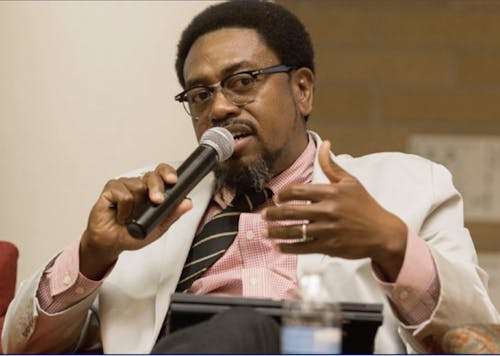
Terrence Blackman, PhD, Founder & CEO, Guyana Business Journal

terrence.blackman@guyanabusinessjournal.com
Latest Webinars